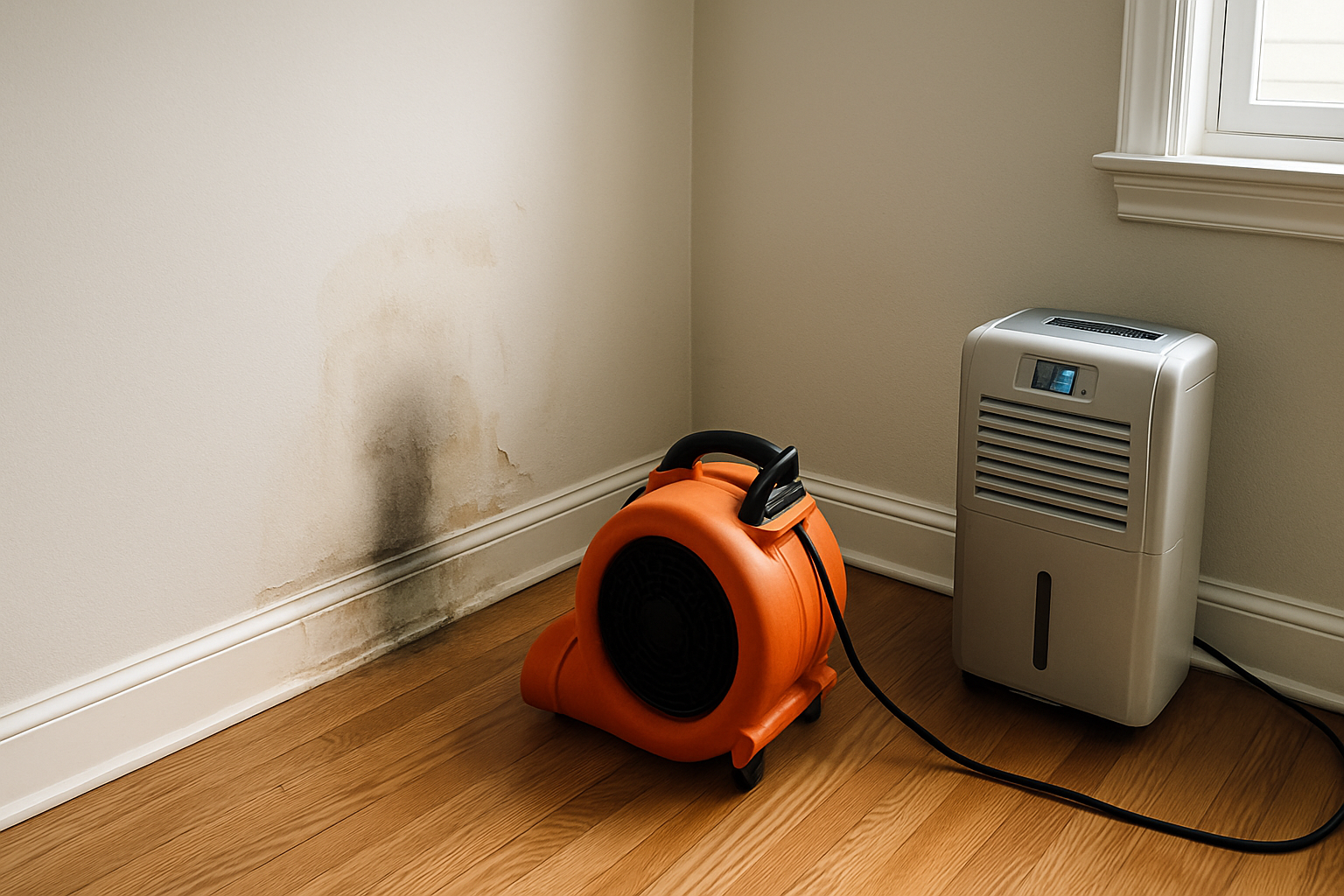
High-rise Restoration Inside Hoboken Waterfront Buildings
The Hoboken waterfront — Maxwell Place, Hudson Tea, the W Hoboken residences, 700 Grove, plus the smaller post-2000 condo buildings along Sinatra Drive and Frank Sinatra Park — runs on professional property management with strict vendor protocols. Building access requires pre-cleared COIs ($2M general liability + workers comp, building named additional insured), front-desk approval, and after-hours noise windows for any equipment-heavy work. Front-loading the building coordination is what determines whether we're on-site within 12 minutes of dispatch or stuck in the lobby for 4 hours waiting on paperwork.
We're pre-qualified at most of the major Hoboken waterfront buildings. That means when a cascade happens — supply line failure on the 12th floor affects 3-5 units below before maintenance reaches the riser shut-off — we roll immediately, the front desk lets us through, and tech teams deploy in parallel rather than working unit-by-unit. Cascade containment is the single highest-value thing we do at scale: every minute saved between burst and shut-off saves another unit from joining the loss.
Per-unit documentation for multi-carrier claims
Each affected unit has its own HO-6 carrier, and the building has a master policy covering shared elements. Per-unit Xactimate scopes plus a master-policy summary delivered together — not sequentially — cuts an average of three weeks off the multi-carrier claim cycle compared to the typical sequential approach. That's our standard delivery, not an upsell.
Combined-sewer flooding in lower-elevation buildings
The lower-elevation Hoboken buildings (and below-grade garden units in the older mid-block buildings) face a separate exposure: combined-sewer-overflow backup during heavy summer storms. That's a Cat-3 sewage cleanup protocol, not standard water restoration. We arrive equipped for the right protocol based on the dispatch description rather than guessing on arrival.
Coordinating with smaller co-op boards vs large property management
Not every Hoboken multi-unit building runs through a property management company. Smaller mid-block converted brownstones often operate as 4-to-8-unit co-ops with a board that meets monthly and may have less formal vendor approval processes. The work itself is identical to large-building restoration; the coordination layer differs. For co-op board buildings, we work with whichever board member responds to the loss, often coordinating multi-unit access on the fly. For larger buildings with dedicated property management, we plug into their work-order system, COI tracker, and after-hours-access protocols. Adjusting the front-end coordination based on building governance is what determines whether a Hoboken multi-unit claim closes in three weeks or three months.